

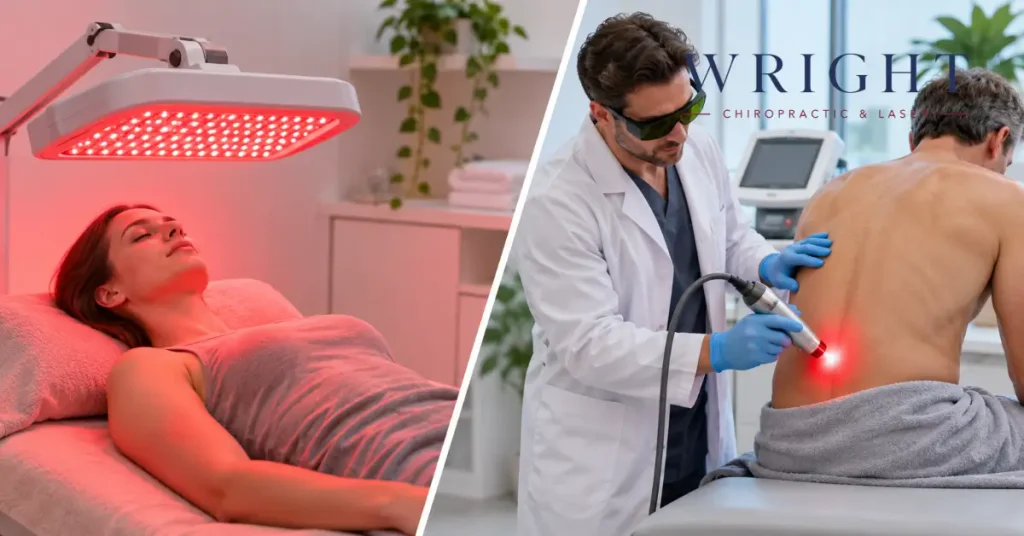
Red light therapy uses low-power light, while Class IV laser therapy uses higher-powered light intended to reach deeper tissues.
The terminology can be confusing. You’ll hear red light, cold laser, LLLT, and Class IV. Many people search red light therapy vs laser therapy after seeing home panels online. So, what’s the difference? The main differences involve the light source, power output, wavelength, and treatment application.
Mequon winters bring stiff joints, shoveling strains, and long, dark evenings. Many people turn to home red light panels around then. Wright Chiropractic & Laser uses two lasers, the Horizon handheld and the Summus Laser Pod. This guide explains both options in plain words, so you can pick the right fit.
Key Takeaways
- Home option: Red light therapy uses low-power red or near-infrared light, mostly from LEDs. The light’s penetration depends on its wavelength, intensity, and the characteristics of the tissue being treated.
- Clinic option: A Class IV laser is a high-power laser classification that includes devices capable of emitting more than 500 milliwatts. Higher power output can allow more energy to be delivered to deeper tissues, depending on the wavelength and treatment conditions.
- Best fit: Red light may suit mild, surface aches. Deeper joint, back, or nerve pain may need a Class IV laser.
- Safety: Both may be used safely when appropriate precautions are followed. Class IV lasers require trained operation and suitable eye protection.
- Evidence: Studies show promise but are small and mixed. Neither option is a cure, and results vary.
What Is Red Light Therapy?
Red light therapy uses low-power red or near-infrared light, often from LEDs, to reach shallow tissue.
It’s a gentle form of light therapy. Most red light therapy uses LED bulbs, not a focused laser beam. People use it at home, at spas, and in some clinics. It is also popular for skin health and skin rejuvenation, but this guide focuses on pain.
How Red Light Works
Red light works by sending light energy into cells, where it may boost their energy and calm inflammation. The device sends light energy into your skin. This process is known as photobiomodulation, or PBM. Photobiomodulation is being studied for its potential effects on cellular activity, pain, and inflammation.
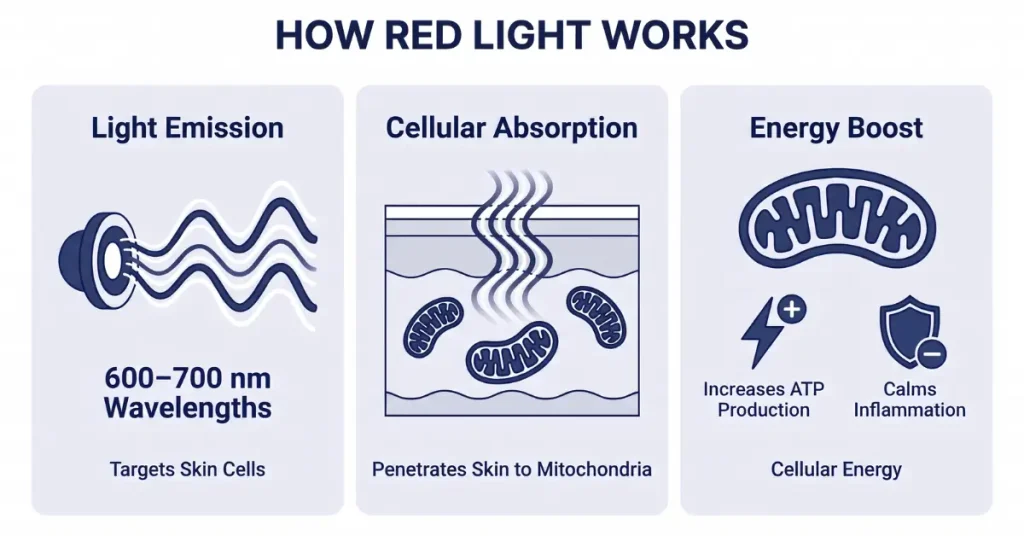
Devices use specific wavelengths of light, mostly red and near-infrared wavelengths. Red light sits around 600 to 700 nanometers. Near-infrared wavelengths run longer and reach a bit deeper. Most LED light only reaches a few millimeters under the skin. Light absorption by cellular components, including mitochondria, may influence adenosine triphosphate (ATP) production and other cellular processes.
Learn more from Cleveland Clinic on red light therapy.
Red Light, Cold Laser, LLLT: What the Names Mean
All of these names describe light-based care, but they differ in light source and power. Light care goes by many names, and there are several forms of laser therapy. Here’s a quick guide:
| Name | What It Means |
|---|---|
| Red light | Low-power light, usually from LEDs |
| Cold lasers | Low-power lasers that don’t feel warm |
| Low-level laser therapy (LLLT) | Another name for cold laser therapy |
| Photobiomodulation | The science term for all light-based care. |
| Class 3 laser | A laser classification that includes devices with lower accessible emission levels than Class IV lasers. |
| Class IV laser | A high-power laser classification that includes devices used in some therapeutic applications. |
Laser light is coherent, meaning its waves have a consistent phase relationship. Laser beams are also generally more directional than LED light. Light-emitting diodes spread their light out over a wider area.
What Is Class IV Laser Therapy?
A Class IV laser is the strongest type of therapy laser, so it reaches deeper tissue. Class IV laser therapy uses a therapeutic laser with much higher power than red light. That extra power helps the light penetrate deeper into muscles, tendons, and joints. Clinics use it for a range of therapeutic applications, from sore knees to back strain.
What “Class IV” Means
The FDA sorts lasers into classes by power and risk. This laser classification runs from Class I up to Class IV. A Class IV laser puts out more than half a watt of power, or 500 milliwatts, according to the OSHA Technical Manual on lasers. The FDA says its direct or reflected beam can harm eyes and skin.
Why More Power Can Reach Deeper Pain
Penetration depth depends on power and wavelength. The amount of energy delivered to deeper tissues depends on factors such as wavelength, power, beam characteristics, and tissue absorption. That’s why clinic laser therapy often uses this form of laser. It suits deep tissue pain, like a sore hip or knee.
What Are the Main Differences: Red Light Therapy vs Laser Therapy?
The main differences include the light source, wavelength, power output, treatment delivery, and intended application.
The difference in power changes almost everything else. Here’s a side-by-side look at red light therapy vs laser therapy, or Class IV laser vs red light:
| Feature | Red Light Therapy | Class IV Laser Therapy |
|---|---|---|
| Light source | Mostly LED | Focused laser light |
| Power | Low | High, more than 0.5 watts |
| Depth of penetration | Shallow, near the skin | Deeper muscles and joints |
| How it feels | Nothing, or mild warmth | Gentle warmth |
| Who runs it | You, at a spa or home | A trained provider |
| Safety gear | Eye shields often advised | Protective glasses required |
The distinction between Class 3 and Class IV lasers involves their output characteristics and associated safety requirements.
Is LED Light as Effective as Laser Light?
LED and laser devices may produce different treatment effects depending on their wavelength, power, and application. Neither technology is automatically more effective for every condition. A red light therapy device spreads red and near-infrared light over a wide area, which suits skin health and general wellness. A laser therapy device focuses its beam, so cold laser therapy and Class IV lasers can deliver a set dose to one joint. Both approaches are being studied for potential effects on pain and tissue recovery. Treatment parameters and the condition being addressed are important considerations.
Which One Works Better for Pain Relief?
Red light may suit surface aches, while a Class IV laser may suit deeper joint or back pain. Your treatment area matters most. Deeper pain often needs deeper penetration than a home panel can give. For example, deep low back pain sits under thick layers of muscle.
Red Light Therapy vs Laser Therapy by Pain Type
The appropriate treatment depends on the underlying condition, treatment area, and available clinical evidence. This table shows how red light therapy vs laser therapy plays out for common Mequon aches:
| Your Pain | Better Fit | Why |
|---|---|---|
| Skin or surface aches | Red light | Shallow light reaches the area |
| Joint pain or arthritis | Class IV laser | Treatment choice depends on the affected joint, diagnosis, and available evidence. |
| Neck pain from desk work | Either, based on depth | Neck muscles sit fairly close to the skin |
| Back pain | Class IV laser | Back muscles sit deep |
| Neuropathy in the feet | Class IV laser or LLLT | Light therapy may be considered in selected cases, but evidence and treatment recommendations vary. |
Red light and laser therapy may be considered for different applications, but the most appropriate approach depends on the condition, treatment parameters, and clinical evidence.
What the Research Says
Studies on laser therapy for pain are mixed and often small. Cleveland Clinic says researchers are still studying red light therapy for pain and inflammation. Some reviews have reported that outcomes differ by treatment dose, although findings vary across conditions and studies. The American College of Physicians rated the evidence for low-level laser therapy in chronic low back pain as low quality, as noted by the NCCIH.
Can a Home Red Light Device Do the Job?
For mild aches, maybe. Home panels are handy and cost less over time. Home devices may have different power outputs and treatment specifications from professional clinic devices. Start slowly and follow the instructions.
Are Red Light and Class IV Lasers Safe?
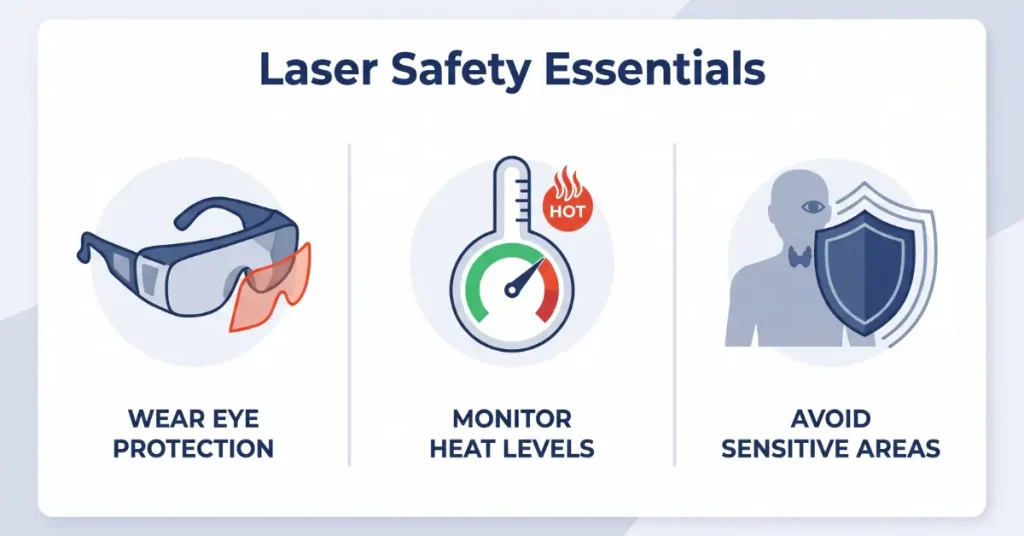
Both are generally safe when used correctly, but a Class IV laser needs trained hands and eye protection.
These options are non-invasive and drug-free. Still, light can harm your eyes if you look at it directly. Keep these points in mind:
- Always wear the glasses your provider gives you
- Tell your provider if the warmth feels too strong
- Avoid treatment over a pregnancy or a known cancer area
- Ask a doctor first if light bothers your skin or eyes
- Follow the time limits on any home device
Read our FDA laser disclaimer for more on device use.
How Do You Choose Between Red Light and a Class IV Laser?
Consider the underlying condition, duration of symptoms, treatment goals, and whether professional supervision is needed. Use this quick guide:
| If You… | Consider |
|---|---|
| Have mild, surface aches and want daily home use | A home red light panel |
| Have deep joint, hip, knee, or back pain | Class IV laser therapy in a clinic |
| Have pain that has lasted months | A clinical evaluation to identify the cause and discuss appropriate treatment options. |
| Want an additional treatment alongside physical therapy | Discuss whether clinic-based laser therapy is appropriate as part of your care plan. |
| Are pregnant or have a cancer history | A doctor’s okay before any light therapy |
How Does Wright Chiropractic & Laser Use Laser Therapy?
Dr. Wright starts with an exam, then picks the laser that fits your pain area. Wright Chiropractic & Laser pairs laser therapy with chiropractic care for many chronic conditions. Gentle chiropractic methods, like Network Spinal Analysis, can work alongside laser visits.
An Exam Before Any Laser Care
Dr. Andrew Wright checks where your pain starts and how deep it sits. He also asks about acute and chronic pain, past injuries, and your goals. Then he explains the red light therapy vs laser therapy choice for your pain and why.
Horizon Handheld Laser for Spot Pain
The Horizon targets one sore spot, like a stiff shoulder after shoveling. It sends laser energy right where you hurt. The treatment is intended to deliver light energy to the targeted area. Its clinical effects may vary.
See how Horizon handheld laser therapy works.
Summus Laser Pod for Wider Areas
The Summus Laser Pod covers larger areas, like your back or both legs. It’s a good fit for widespread chronic pain. Both devices are intended to deliver therapeutic light to targeted areas. Clinical outcomes may vary depending on the condition and treatment protocol.
Where Can You Find Laser Pain Relief Near Mequon?
Wright Chiropractic & Laser offers laser care at 1045 W Glen Oaks Ln, Ste 101, Mequon, WI 53092.
Searching for a chiropractor for red light therapy near me? This office focuses on clinic laser therapy with the Horizon and Summus lasers. The office is located near I-43 and Port Washington Road and has a wheelchair-accessible entrance. Dr. Wright sees patients by appointment, so call or text first. Free on-site parking is available.
- Mornings: 9 to 11 AM, Monday to Friday
- Evenings: 3 to 6 PM, Monday, Wednesday, and Thursday
We serve Thiensville, Cedarburg, Grafton, Bayside, Fox Point, and Whitefish Bay. Patients also visit from Milwaukee, Shorewood, Wauwatosa, Brookfield, and Menomonee Falls. Explore our chronic pain relief in Mequon.
Red Light Therapy vs Laser Therapy FAQs
Is a Cold Laser the Same as Red Light Therapy?
Not quite. Both use low power, but cold lasers use a focused beam. Most red light devices use LEDs instead. Laser devices typically emit light within a narrower wavelength range and produce a more directional beam, while LEDs generally emit light over a broader range and spread it over a wider area. Both fall under photobiomodulation, so the main differences are focus, power, and how deep the light reaches.
Does Class IV Laser Therapy Hurt?
No, most people feel gentle warmth. Tell your provider if it ever feels too hot. Most patients can generally resume normal activities after treatment, depending on their individual circumstances. You and the provider wear protective glasses, and the laser head usually keeps moving, so heat does not build up in one spot.
How Many Laser Sessions Will I Need?
It depends on your pain, its depth, and how long you’ve had it. Dr. Wright sets a plan after your exam. Newer aches may need fewer visits than long-standing pain. Dr. Wright checks your progress along the way. See what chiropractic laser therapy costs in Mequon.
Does Insurance Cover Laser Therapy?
Many plans don’t cover it. Coverage varies a lot. Call your insurer and ask our office about costs first. Some people use HSA or FSA funds for laser care, but check with your plan first. Home red light panels are rarely covered by insurance.
Can Red Light Therapy Help Neuropathy?
Research is still early. When you compare clinic laser therapy vs home red light for nerve pain, depth matters. Ask about your options at your exam. A 2023 review of eight small studies found less nerve pain with light therapy in diabetic neuropathy. Learn about our neuropathy treatments in Mequon.
Is Red Light Therapy a Type of Laser Therapy?
Not exactly. Red light therapy and laser therapy both use light to support healing, so they share the photobiomodulation family. Most red light devices use LEDs, though, while laser therapy uses a focused, coherent beam. That beam is why a laser can deliver more energy deeper.
Can You Overdo Red Light Therapy?
Yes, more is not always better. Light therapy follows a dose curve, so too much light can weaken the benefit or irritate your skin and eyes. Follow the time and distance limits on your device, protect your eyes, and stop if redness or headaches appear.
What Is the Difference Between UV and Red Light Therapy?
Ultraviolet (UV) light uses shorter wavelengths that can burn skin and raise skin cancer risk with heavy exposure. Red light has longer wavelengths than ultraviolet light and does not produce the same tanning effects. However, device safety depends on its specifications and correct use. That is why red and near-infrared light, not UV, are used for pain care.
Can You Use Red Light and Laser Therapy Together?
Often, yes, as long as your provider plans the timing. Some people may use a home red light device alongside clinic-based treatment, but they should discuss the combination and treatment schedule with their provider. Tell Dr. Wright about any home device you use, so the total light dose stays in a safe range.
How Long Does It Take to See Results?
The time needed to notice a response varies. Some patients may report changes after several sessions, while others may not experience meaningful improvement. Results depend on how deep and how old the pain is, plus your overall health. Long-standing pain usually takes longer. Your provider should track progress and adjust the plan as you go.
Find the Right Light Therapy for Your Pain
Call or text 262-228-6198 to book an exam and see which light therapy fits your pain. The red light therapy vs laser therapy choice depends on how deep your pain sits. Call Wright Chiropractic & Laser at 262-228-6198. Dr. Wright will explain your options and build a gentle plan to support your wellness. Patients from Mequon, Thiensville, Cedarburg, and the North Shore are welcome. Ready to explore your treatment options? Schedule your laser exam online today, and take the first step toward steady pain management.