

Exercise-based therapy, gentle hands-on care and sometimes an injection or surgery can help sciatica that lingers for weeks.
Sciatica pain that persists can make everyday activities difficult. MedlinePlus says sciatica often gets better on its own, but it can come back. If yours has lasted more than a month, Mayo Clinic says it’s time to see a provider.
In Mequon, activities such as shoveling snow, recovering from a fall on ice, and spending long periods driving on I-43 may aggravate symptoms. A bulging disc, spinal narrowing, or tight buttock muscle can irritate or compress the sciatic nerve or its nerve roots. Wright Chiropractic & Laser helps people whose leg pain hasn’t eased with rest alone. So, which treatments actually help, and which ones don’t? This guide breaks it down step by step, so you can find the right sciatica pain not going away treatment for you.
Key Takeaways
- A bulging disc, narrow spine, or tight buttock muscle can press on the nerve. Sitting and lifting can keep it irritated.
- Bladder or bowel changes, groin numbness, or new leg weakness need medical care fast.
- Exercise and physical therapy are common initial treatment options. Manual therapy, including chiropractic care, may be considered alongside an exercise program.
- A steroid shot may ease severe pain. Surgery is an option when other care fails and scans match your symptoms.
- Pills like gabapentin, back belts, and TENS show little benefit for sciatica, per NICE.
- Wright Chiropractic & Laser in Mequon, WI 53092 starts with a full exam, then pairs gentle care with home exercise.
Why Does Sciatica Pain Last for Weeks?
Sciatica lingers when a disc, bone, or tight muscle keeps pressing on the sciatic nerve. This nerve runs from your lower back, through the buttock, and down each leg. When something squeezes it, pain shoots down one leg. Numbness, tingling, or burning often comes with it. Doctors call this radiating pain, and the tingling is called paresthesia.
Degenerative changes in the lumbar spine, like disc wear, can also keep up compression of the sciatic nerve. Identifying the underlying cause can help guide treatment for persistent sciatica.
How Long Sciatica Usually Lasts
Many cases ease within a few weeks as irritation around the nerve settles. Persistent pain may indicate ongoing nerve irritation or another underlying condition that needs evaluation.
Common Reasons It Lingers
Ongoing pressure on the nerve root and daily strain are the most common reasons sciatica sticks around. These include:
- A herniated disc that pushes on a nerve root
- Spinal stenosis, a narrowing of the spine, often in older adults
- A tight piriformis muscle deep in the buttock
- Long hours of sitting at a desk or in the car
- Lifting or twisting too soon, like shoveling wet snow
Learn more about sciatica pain treatment in Mequon.
When Should You See a Doctor Right Away?
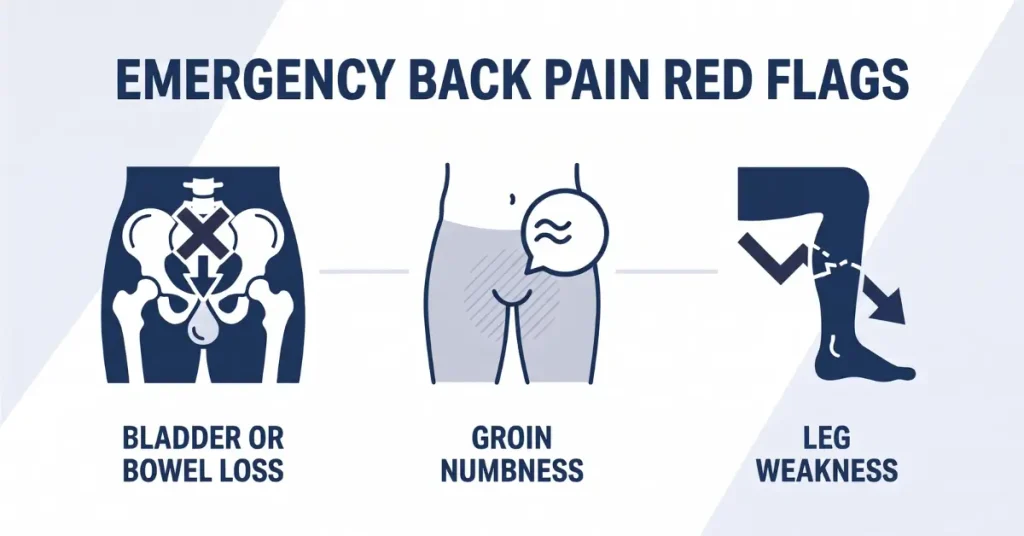
Seek immediate medical attention for new bladder or bowel control problems, numbness around the groin or inner thighs, or new or worsening leg weakness. Back pain following a significant fall also requires prompt medical evaluation.
These signs can mean severe nerve pressure or another serious problem. Don’t wait them out. A rare but serious condition called cauda equina syndrome can cause permanent nerve damage and loss of bladder or bowel control if not treated promptly. Seek emergency medical attention if you experience symptoms associated with this condition. MedlinePlus lists these warning signs:
- Losing control of your bladder or bowels
- Numbness in the groin or inner thighs
- New weakness in a leg or foot
- Fever with back pain
- Back pain after a bad fall on an icy driveway
- Pain that’s worse lying down or wakes you at night
See the full list from MedlinePlus on sciatica.
How Is Sciatica That Won’t Go Away Diagnosed?
MRI: Persistent symptoms when imaging is clinically indicated, or suspected serious underlying conditions. As Mayo Clinic notes, pain that doesn’t improve within a few weeks may need tests to find the cause.
| Test | What It Checks | When It’s Used |
|---|---|---|
| Straight-leg raise | Whether lifting your leg brings back the shooting pain | Most first exams |
| Strength, reflex, and feeling checks | How well the nerve sends signals to your leg | Most first exams |
| MRI | Discs, nerve roots, and the lumbar spine in detail | Pain that lasts weeks or red-flag signs |
| X-ray | Bone spurs and slipped vertebrae | Suspected bone problems |
| Electromyography (EMG) | How fast and well the nerve fires | Weakness or unclear nerve signs |
Which Treatments Help Sciatica Pain That Won’t Go Away?
Exercise comes first, then gentle hands-on care, with injections or surgery for severe or stubborn cases. Most providers move step by step. They start with the safest options and only move up if pain doesn’t ease. Here’s how that ladder of persistent sciatica relief options usually looks:
| Step | Treatment | When It’s Used |
|---|---|---|
| 1 | Home care: ice, heat, gentle walking | First few weeks |
| 2 | Exercise and physical therapy | When pain lingers |
| 3 | Gentle chiropractic or manual therapy | Alongside exercise |
| 4 | Steroid injection near the nerve | Severe pain that limits daily life |
| 5 | Surgery to free the nerve | Weakness, or pain other care can’t ease |
Exercise and Physical Therapy
Exercise and physical therapy are the first-line treatment for sciatica that lingers. The UK’s NICE guideline suggests exercise programs for low back pain with or without sciatica. Mayo Clinic adds that physical therapy can build posture, strength, and range of motion. For example, if you spend most of your workday sitting at an office in Milwaukee, a physical therapist may teach you exercises to improve hip and back mobility. A therapist may teach you hip and back moves to ease nerve pressure.
Over-the-Counter Pain Relievers
Over-the-counter pain relievers may ease mild flare-ups for a short time. MedlinePlus lists them as part of home care. Anti-inflammatory medicines, such as ibuprofen or naproxen, may help relieve pain and inflammation. Ask your doctor before using them for more than a few days, especially if you have stomach, kidney, or heart problems.
Gentle Chiropractic and Manual Therapy
NICE says manual therapy may help sciatica, but only alongside exercise. Mayo Clinic discusses spinal manipulation as one possible approach to managing certain types of back pain.
Read the NCCIH guide to spinal manipulation.
Steroid Injections
A doctor injects a steroid near the irritated nerve root. Epidural steroid injections may provide temporary pain relief for some patients. A healthcare professional can explain whether an injection is appropriate and how often it may be considered. NICE suggests injections for sudden, severe sciatica. These corticosteroid shots are often given by interventional pain management doctors, using imaging to guide the needle.
Surgery
Surgeons can remove the part of a disc or bone spur pressing on the nerve. Surgery may be considered for persistent, disabling pain that does not improve with appropriate nonsurgical treatment, or when progressive neurological problems require intervention. A 2007 Dutch study found that surgery provided faster relief for some patients, although outcomes were similar to those of nonsurgical treatment after one year.
For severe sciatica that won’t improve, common surgeries include a minimally invasive microdiscectomy for a herniated disc and a laminectomy for spinal stenosis. A spine specialist can explain the recovery time for each. For selected patients with persistent pain after spine surgery, a pain management specialist may evaluate whether spinal cord stimulation is appropriate.
Which Sciatica Treatments Don’t Help Much?
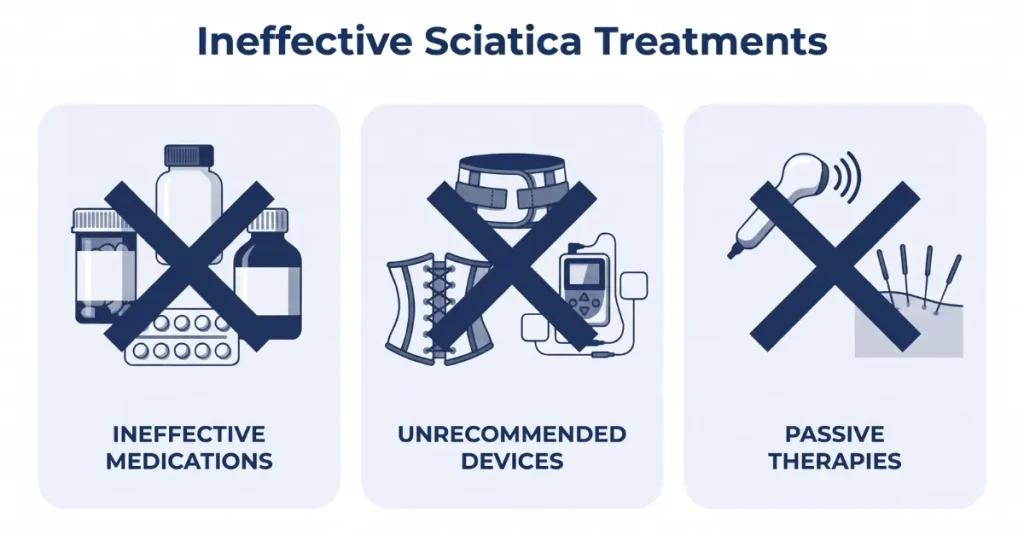
UK guidelines, including NICE recommendations, advise against certain treatments for sciatica, including gabapentinoids, oral corticosteroids, and TENS.
NICE reviewed the research and found little benefit, or even harm, from these treatments:
- Gabapentinoids, like gabapentin and pregabalin
- Oral steroids and benzodiazepines
- Opioids for long-term sciatica
- Back belts and corsets
- TENS units and ultrasound therapy
- Acupuncture, which NICE doesn’t recommend, though Mayo Clinic calls the research mixed
Don’t stop any medicine on your own. Ask your doctor first. See the NICE sciatica guideline.
What Can You Do at Home During a Mequon Winter?
Use ice, then heat, keep walking gently, and go easy on lifting while the nerve calms down. Small daily habits can keep sciatica pain that won’t go away from getting worse. Try these:
- Apply a cold pack for short periods, using a protective layer between the pack and your skin. Heat may also provide relief.
- Walk a little each day, indoors on icy days
- Avoid activities that aggravate your symptoms, including heavy lifting and twisting, and ask your healthcare provider when it is appropriate to resume them.
- Push snow to the side instead of lifting it
- Stand and stretch every 30 minutes on long drives or desk days
- Sleep on your side with a pillow between your knees
Mayo Clinic warns that staying inactive can make symptoms worse. So rest a day if you must, then keep moving.
How Does Wright Chiropractic & Laser Help Lingering Sciatica?
Dr. Wright begins with a full examination and may incorporate Network Spinal Analysis, laser care, and home exercises into an individualized care plan.
Wright Chiropractic & Laser focuses on sciatica pain that won’t go away, plus chronic pain and hypermobility. Dr. Andrew Wright builds each plan around your exam, not a set routine.
A Full Exam First
Dr. Wright checks your spine, hips, posture, and nerve signs. He looks for the source of the pressure, like a disc or a tight piriformis muscle. If you need a medical doctor or imaging, he tells you. See what a new patient chiropractic evaluation costs before you book.
Gentle Network Spinal Analysis
This method uses light touch instead of quick twists. This approach may appeal to patients who prefer gentle, light-touch techniques.
Horizon and Summus Laser Care
The Horizon handheld laser targets one sore spot, like the low back or buttock. The Summus Laser Pod covers wider areas. Both are intended to help manage pain, although individual results may vary.
See how Network Spinal Analysis works.
Where Can You Get Sciatica Treatment in Mequon, WI?
You can get gentle sciatica treatment in Mequon, WI, at 1045 W Glen Oaks Ln Ste 101, Mequon, WI 53092. Wright Chiropractic & Laser serves Thiensville, Cedarburg, Grafton, Milwaukee, Shorewood, Whitefish Bay, Fox Point, Bayside, Wauwatosa, Brookfield, and Menomonee Falls.
Office hours are Monday, Wednesday, and Thursday from 9:00 to 11:00 AM and 3:00 to 6:00 PM, and Tuesday and Friday from 9:00 to 11:00 AM. Appointments are required. The office has free on-site parking and a wheelchair-accessible entrance, parking lot, and restroom. Explore our sciatica pain relief services.
Sciatica Pain That Won’t Go Away FAQs
How Long Is Too Long for Sciatica?
If pain lasts more than a month, see a provider, as Mayo Clinic advises. Go sooner if you notice leg weakness, groin numbness, or bladder changes. Those signs can mean the nerve needs care right away. A provider can check your strength and reflexes to find the cause.
Can a Chiropractor Help Sciatica?
It may, for some people. Gentle care can ease tight muscles and stiff joints near the nerve. Ask how the chiropractor pairs visits with home exercise. A qualified chiropractor should also recognize when symptoms require evaluation by a medical doctor. Learn about gentle chiropractic care in Mequon.
Should I Rest or Keep Moving?
Keep moving gently. A short rest is fine, but MedlinePlus doesn’t recommend bed rest. Lying still for days can stiffen your back and slow healing. Try light chores and gentle stretches, then add a little more each day. Light activity helps keep blood flowing to the irritated nerve.
Will I Need Surgery for Sciatica?
Most people don’t. Many improve with exercise and hands-on care. Your doctor will raise surgery only if nerve signs worsen or nothing helps. If you do need it, a microdiscectomy is a common, minimally invasive option that removes the part of the disc pressing on the nerve.
Does Walking Help Sciatica?
Often, yes. Short, easy walks keep muscles loose and blood moving. Stop if walking sends sharp pain down your leg. Start with 5 to 10 minutes on level ground, then add a few minutes each day. On icy days, walk laps indoors instead.
Why Is Sciatica Pain Worse at Night?
Lying down can change pressure on an irritated disc or nerve root, and fewer distractions make pain feel stronger. Some sleep positions also stretch the nerve. Try sleeping on your side with a pillow between your knees. Pain that keeps waking you up should be checked, as MedlinePlus advises.
What Is Nerve Pain and What Causes It?
Nerve pain, also called neuropathic pain, comes from an irritated or damaged nerve instead of a sore muscle or joint. It often burns, tingles, or shoots. Common causes include pressure from a herniated disc, diabetes, injury, and some medicines. Sciatica is one of the most common types.
What Is Piriformis Syndrome?
Piriformis syndrome happens when the piriformis muscle, deep in the buttock, tightens and irritates the sciatic nerve. It often causes a deep ache that worsens with sitting. Stretching, physical therapy, and gentle hands-on care may help. Your provider can tell it apart from a disc problem with an exam.
Can Sciatica Go Away Permanently?
Yes, many people recover fully, but sciatica can come back. MedlinePlus notes it often improves on its own yet may return. Regular exercise, proper lifting techniques, and breaks from prolonged sitting may help reduce the risk of recurring symptoms. Maintaining a healthy weight may also support lower back health.
Get Help for Sciatica Pain That Won’t Go Away
Sciatica pain that won’t go away usually has a cause you can find and treat. Call Wright Chiropractic & Laser at 262-228-6198. Dr. Wright will look for the source and build a gentle, step-by-step plan. You can also call or text to ask questions before your first visit. Patients from Mequon, Thiensville, Cedarburg, and the North Shore are welcome. Ready to stop waiting for the pain to pass? Schedule an appointment online today and take the first step toward moving freely again.